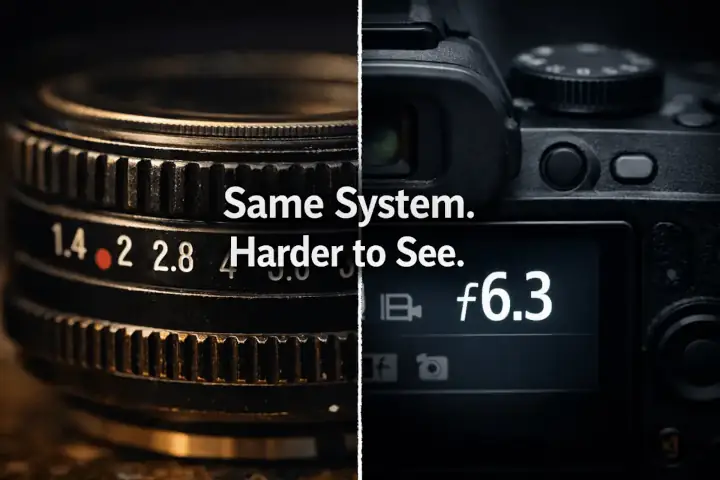
aperture stops are simple
but the system is not always easy to see
the sequence
a vintage 50mm lens might show this
f1.4
f2
f2.8
f4
f5.6
f8
f11
f16
f22
these numbers are not random
they follow a simple rule
each step doubles or halves the light
one step equals one stop
two steps equal four times the change
three steps equal eight times the change
turn the ring and you can see the aperture open and close
you feel the clicks
you see the blades move
it is tactile
immediate
modern lenses
now compare that to a modern lens
f3.5
f4
f4.5
f5
f5.6
f6.3
f7.1
f8
these numbers are still correct
but the system is harder to see
they feel like values to memorise
rather than relationships to understand
the aperture scale
the aperture scale was not just measuring light
it was teaching you how to see it
it worked through three things
rhythm
pattern
physical memory
rhythm
each step represents the same change
the spacing is consistent
your hands learn it quickly
pattern
the numbers relate to each other
you begin to see connections
instead of memorising values
physical memory
manual lenses made this physical
you turned a ring
you felt each step
you saw the change happen
this builds intuition faster than any screen
what changed
modern cameras did not remove this system
they made it less visible
the logic is still there
but harder to notice
rebuilding intuition
use full stop increments
learn the core sequence
think in stops
not numbers
try a manual lens
even briefly
the point
modern cameras are extraordinary tools
nothing here changes that
but sometimes the best tool
is the one that teaches you
and the aperture scale did exactly that
next: why your photos are blurry
previous: what iso does in photography